
 WSIS Forum 2023 Hackathon Winner (ITU / United Nations)
 Identity · Infrastructure · Governance
Digital sovereignty, on purpose.
Peranto researches and builds self-sovereign identity, infrastructure, and tokenomics that return control to people — without trading rigor for sustainability.



Thesis
Building a company that does good
Digital identity should not be a login outsourced to platforms. We work with open standards — DIDs, verifiable credentials — and applications that keep data in the possession of those who create it.
We explore zero-knowledge proofs in identity flows, digital government, digital democracy, and more circular economies. We do not promise instant revolutions: we document, verify, and publish what we learn.
Peranto connects research, strategic communication, and sovereign software. If a service still uses a traditional payment gateway for pragmatism, we say so; the architecture aims at verifiable on-chain value and payments, with keys held by participants.
Pillars
Lines of work
-
Self-sovereign identity
Decentralized identifiers and credentials that people control, verify, and revoke.
-
Sovereign infrastructure
Data and services without single-vendor lock-in. PWAs and architectures that respect possession.
-
Verifiable privacy
Zero-knowledge proofs and trust design without exposing more than necessary.
-
Digital governance
Institutions, civic participation, and verifiable trust in public contexts.
-
Purpose-driven tokenomics
Peer-to-peer value with auditable rules — an alternative to concentrated payment rails and extractive financial infrastructure.
-
Circular economy
Research horizon: value flows, data waste, and regeneration in digital ecosystems.
Practice
Deployed research
The spine is Peranto Protocol: self-sovereign identity, verifiable credentials, and DisCO nodes that recirculate value. Around it, production software and experiments you can audit or self-host — without capturing your data.
We are not trying to outscale global market giants. We publish infrastructure so communities can deploy alternatives — identity, mobility, voting, coordination — within boycott, divestment, and sanctions (BDS) and active solidarity economies: local pilots, open source, community-scale growth.
Peranto Protocol

Spine of the ecosystem: did:peranto, verifiable credentials, and DisCO nodes on EVM/PVM — sovereign identity with on-chain solidarity economics (Paseo / Hardhat).
What is a DisCO?
A DisCO (Distributed Cooperative Organization) is a distributed cooperative: members, its own treasury, and auditable rules. It is not a DAO that only maximizes stake — it recognizes Livelihood (income), Love (commons / pro-bono), and Care (mutual care and reproducing the collective).
Solidarity economy in the protocol
Each node sets the boundary between private and common. Tips, contributions, and documented work move Love and Care; paid livelihood can leave a share to the node treasury. Period reputation is measurable, not a slogan.
Identity that returns as dividend
Registering a name, anchoring a credential, or contributing to the circuit leaves fees in the ProtocolTreasury. At period close, harvest and distribute recirculate that value to eligible DisCO nodes — and from there to those who sustained the identity layer. Paying to exist in the protocol does not feed extractive rent: it joins the share-out.
Contracts + SDK + CLI, Aura Wallet (MV3 extension), and a portal with linktr33. Sensitive data lives in the JWT; only the anchor and economic flows sit on-chain.
-
Peranto identity: wallet, DisCO memberships, credentials, and DID services.
-
Public linktr33 page: @name profile, channels, and business card with QR.
-
DisCO schema catalog: claim, request, and issue Member, EcoTest, CommonsWork, and Care.
-
Solidarity economy: active DISCOs, services/schemas, and period Love/Care reputation.
Lumo
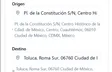
Work-in-progress mobility and experiences platform: passengers, drivers, and ops for collectives, transport companies, or taxi fleets. Functional PoC with Polkadot-based identity and payments — not in public production.
What the PoC includes
- Trip requests with map, fare estimates, passengers, and scheduling; flows for long-duration experience hosts.
- Substrate/Polkadot base layer for account identity and payment settlement (not only traditional gateways).
- Separate roles: passenger, driver, fleet admin — aimed at community or enterprise adoption.
- Panel to manage trips, assign drivers, and approve driver onboarding with documentation.
- Trip start with location check and PIN or QR code between driver and passenger.
- Open code and self-hosting: offered to teams who want to pilot it; remaining development is quoted on contact.
-
Passenger: origin and destination with map, estimated route, and trip data (demo).
-
Route confirmation, estimated fare, vehicle type, and trip request.
-
Admin: pending trips list, pricing, and driver assignment.
-
Driver onboarding: personal data, license review, and operator approval.
-
Driver: accepted trip with distance, duration, fare, and route actions.
-
Verified start: GPS location, PIN or QR before the trip begins.
Collective, transport company, or taxis?
Lumo is not Uber at scale: it is infrastructure for local pilots. If your organization wants to adopt it, we review scope together — integration, operations, and roadmap gaps — and agree on remaining development cost without aggressive commercial lock-in.
CriterIA Lab 4
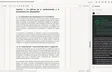
AI-assisted legal and academic writing with verifiable provenance: collaborative editor, LLM agent, C2PA signing, and Polkadot/Substrate identity. Data on your device; code under FSL-1.1-MIT.
Features
- Collaborative Etherpad editor (same-origin), real-time presence, and PDF, DOCX, and ODT export.
- LLM agent (Gemini via secure proxy): propose → review → apply workflow on your document.
- Academic quality evaluation with score, level, and specific areas to improve.
- Non-repudiable documents: C2PA signing on the server and Substrate signing on the client (Polkadot).
- Reversible PII redaction by pattern before sending content to the model.
- PWA with local data; self-host with your API key. FSL-1.1-MIT license (deferred MIT release).
- Personal accounts or team organizations with per-plan token quotas.
- Source log with APA citations and traceability of what the agent consulted.
-
Editor with AI assistant: academic criteria, quality level, and contextual advice.
-
Document evaluation with score, level, and specific areas to improve.
-
Local document library with on-device PDF and optional collaboration.
-
Source log with APA citations and traceability of what was consulted.
-
Digital identity: platform account and Substrate wallet on your device.
-
WebAuthn security to unlock the wallet without relying on password alone.
Managed plan (Stripe, optional)
CriterIA does not lock you in: the software is self-hostable and auditable. The managed plan (~$29 USD/month, 2M tokens, up to 5 people) currently bills through Stripe as a convenience — not as the product’s identity. Your on-device Substrate wallet is the trust layer; moving off concentrated gateways is the ecosystem direction, not marketing hype.
Yohualli Protocol Lab 2
Yohualli (Nahuatl: midnight darkness). Ongoing research actively seeking funding: non-invasive proof of personhood that verifies a real human without Sybil attacks, preserving privacy and anonymity.
Works wherever authentication must establish a person behind the account — not a bot or Sybil attack — without invasive biometrics or centralizing the social graph in one vendor.
Aware of the digital-identity trilemma (centralization, sovereignty, security): strong on decentralization and sovereignty; weaker on deduplication, because social proofs have low technical Sybil replication cost and need human coordination for a healthy graph.
Zero-knowledge proofs compute the local graph and an optimal weight defined by the verifier to theoretically validate that human “personality.” Technical circuits in Noir (Aztec) with Barretenberg in the lab.
Known limit: ZK is CPU-intensive. A PWA can generate proofs on mid- and high-tier phones; low-end devices are effectively excluded.
Aims for a trust environment with minimal centralization — groundwork for digital government, civic participation, and democratic practice.
Needs patronage and allies from civil society and public democracy institutions; not exclusive if one side is missing.
-
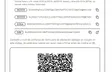
QR code and account formats (Substrate and EVM) for in-person or coordinated attestation ceremonies.
-
Local graph view: attester → subject edges and Tier-SybilRank from the center.
-
P2P relay, local graph in IndexedDB, and verifiable Sr25519 attestation history.
-
ZK lab in the PWA: Noir/Barretenberg circuits (Merkle and subject commitment) with measured prove times.
Andino Wallet
Signed GPS logbook for mountaineering: verifiable summit evidence for FEACH, without closed commercial rescue apps.
Experiment with Web3 Chile and the Chilean Mountaineering Federation (FEACH): prevent fraud when someone claims a summit without meeting requirements.
Each GPS milestone ties to the climber’s digital identity and cryptographic signature, producing an auditable log for the federation.
-
Logbook map: routes and checkpoints recorded on Asset Hub (Paseo).
-
Checkpoint with time, GPS coordinates, accuracy, optional photo, and quick emergency access.
Emergency Wallet

Blockchain “radio” for rescuers: listens for emergency remarks and events on Polkadot/Kusama/Paseo with no central backend.
Encoding focused on the on-chain generic events that matter to rescue teams: priority, location, status, and map per alert.
Designed for resilient mobile networks (e.g. Starlink in Chilean cellular). Technical limits remain, but the approach favors availability when centralized services fail.
Under review: Meshtastic and Maven mesh layers to turn analog radio signals into digital ones — a richer architecture that needs more execution budget.
-
Live blockchain radio: current block, processed events, and listen controls.
-
Active emergencies with priority, type, and GPS coordinates.
-
Emergency detail with map (location, route start, and related track).
-
Local unlock: the wallet does not custody keys on external servers.
Identity and infrastructure
AuraDID Lab 1
Refactor of the discontinued KILT parachain Substrate runtime onto current Polkadot. Verifiable credentials paused: legacy serde no longer matches newer Polkadot serialization packages.
KILT remains the best digital-identity reference we know; the team shut the project down. AuraDID keeps that architecture as open source so we are not locked to one vendor or the on-chain DID and credential model.
Still Substrate: it can run as a solochain and connect to Polkadot for relay payments. Refactoring the inherited runtime is expensive; the most viable medium-term path is migrating identity logic to EVM smart contracts.
Aura Wallet Lab 1
Ecosystem base PWA: users own their data — accounts, signing, and connections to Polkadot, Kusama, and PVM (full EVM on Polkadot, Ethereum-interoperable).
Account generation, on-device cryptographic signing (WebAuthn, local encryption), and multi-chain operation with Dedot. Andino Wallet and Emergency Wallet build on this base.
Connects to the Polkadot relay, Kusama, and PVM: a native EVM in the Polkadot ecosystem that stays interoperable with Ethereum without leaving Substrate.
Governance and participation
zkPoll
Hackathon project to explore ZKP generation on Polkadot with ink! contracts — unfinished repository, no active development planned.
A learning experiment only; not a governance product or pilot. Verifiable voting and anonymity live in Yohualli and future work.
Community health
Küme
Proposal by Dr. Carolina Palma Sarmiento (Chilean dentist): early oral cancer detection via the Küme web platform and a network of dentists from multiple universities.
Train an AI model with distributed clinical contributions from the network, prioritizing patient data sovereignty and community teams — not extractive health platforms.
Seeking state entrepreneurship grants for development. Küme means wellbeing in Mapuzungun.
Principles
How we work
- 01
Possession first
Data belongs to those who generate it. We design to minimize unnecessary custody.
- 02
Verifiable openness
Code, standards, and results others can audit. Trust is demonstrated, not declared.
- 03
Rigor and utility
Academic research with practical output. Every claim deserves evidence or code.
- 04
Transparency
Limits, risks, and work-in-progress visible. We prefer honesty to marketing.
Explore
The lab
On the CMS we publish essays, tutorials, and socioeconomic analysis — strategic communication with academic grounding.
-
Crash Course: Privacidad y Confianza Digital con DIDs, VCs y Zero-Knowledge Proofs
Objetivo General Comprender la arquitectura fundamental de la Identidad Descentralizada y cómo las Pruebas de Conocimiento Cero (ZKPs) permiten la verificación de atributos y acciones garantizando la privacidad absoluta del usuario, así como comprender el contexto socio-tecnológico, de financiamiento y de licencias que impulsa su desarrollo, sentando las bases para construir un Estándar Regional de Certeza Digital transfronterizo. Índice * Módulo 1: Fundamentos de la Identidad Descentraliza
-
Soberanía Digital y Rendición de Cuentas en México: Un enfoque desde la Identidad Autosoberana (SSI) y Pruebas de Conocimiento Cero (ZKP) ante la LGMHCTI.
Actualmente, este es un trabajo en progreso, si bien es un ensayo analítico estructurado, debido al alcance sistémico que implica explicar temas de esta naturaleza, no doy por concluido dicho artículo. ¿Quieres mejorar el tiempo invertido en investigación y redacción? Este artículo fue realizado con la asistencia de https://criteria.peranto.app/producto Conoce más Resumen La promulgación de la Ley General en Materia de Humanidades, Ciencias, Tecnologías e Innovación (LGMHCT
-
El Secreto Mejor Guardado para una Tesis Impecable: Cómo CriterIA Transforma tu Investigación de Posgrado
Descubre cómo CriterIA te ayuda a asegurar la calidad, cohesión y consistencia de tu tesis de posgrado o cualquier proyecto de investigación largo y complejo, liberándote del estrés de la revisión manual.
Collaborate
How to collaborate or support
Pick the path that fits you. Not every visitor wants the same thing — and not every project needs the same kind of help.
-
Use
Try CriterIA in production: writing with provenance, signing, and data sovereignty. It is the most mature piece of the ecosystem.
-
Research
Explore PoCs, open source, and lab articles. If you are academia, civil society, or a public institution, we can co-develop.
-
Support
Yohualli, Küme, and other lines seek patronage, grants, or institutional partnerships. We are not exclusive if you can only offer one path.
You can also write us at outreach@peranto.app — we reply when we can, with no sales funnel. Contact form